BLS vs CPR: Which Certification Does Your Employer Require?
Table of Contents
by Pam Graham, AHA Accredited Instructor
Facebook
X
LinkedIn
The most common question we hear at ABC Health & Safety Training is some version of: “My employer says I need CPR… or is it BLS? What is the difference?” The two overlap, but they are not the same card, and showing up with the wrong one can mean repeating a class. Here is how to get it right the first time.
What is CPR certification?
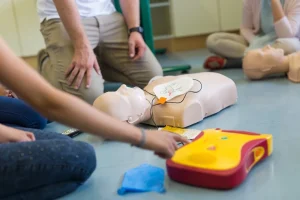
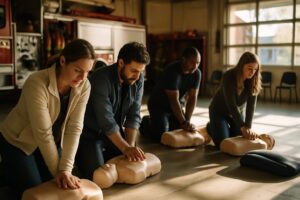
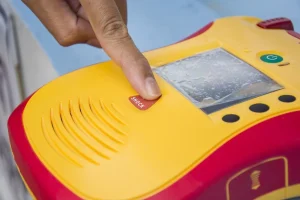
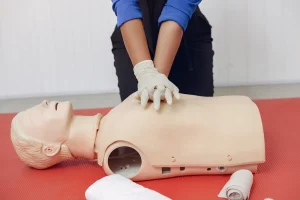
A Basic CPR AED class teaches lay rescuers (regular people, not medical professionals) how to recognize an emergency, perform high-quality chest compressions and rescue breaths on adults, children, and infants, and use an AED. It is the right choice for teachers, childcare providers, coaches, personal trainers, security staff, foster parents, and general workplace safety programs.
What is BLS certification?
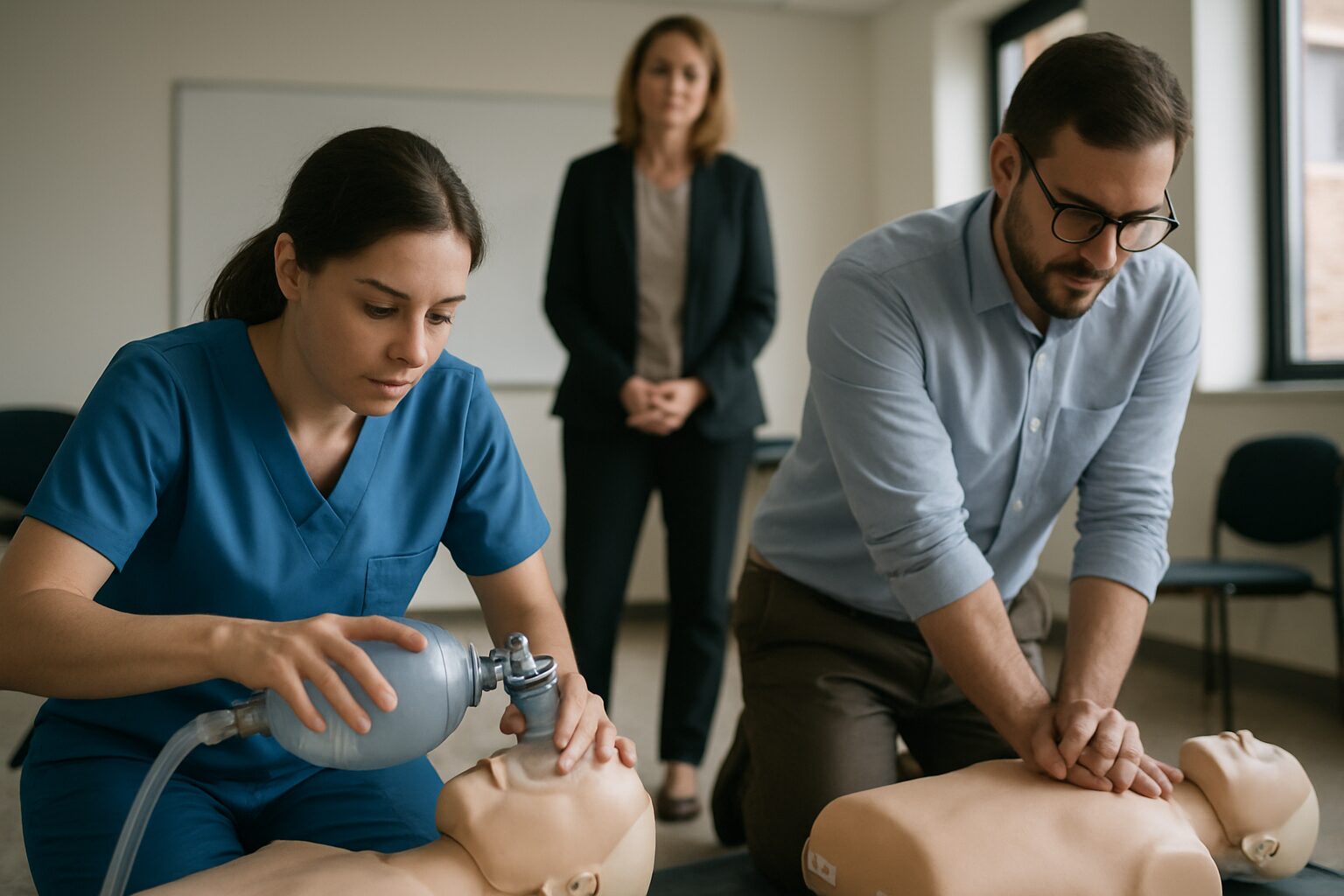
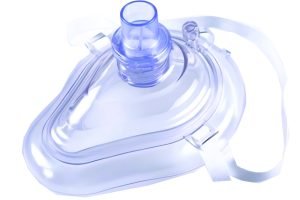
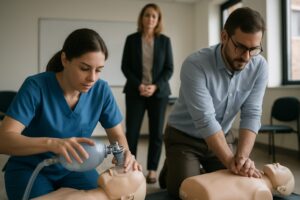
BLS (Basic Life Support) for Healthcare Providers is the professional-level course. It covers everything in CPR plus team-based resuscitation, bag valve mask ventilation, pulse checks, and rescue techniques used in clinical settings. Nurses, CNAs, medical and dental assistants, EMTs, physical therapists, pharmacists, and nursing students are almost always required to hold an AHA BLS Provider card specifically.
The quick answer by job type
Hospital, clinic, dental, or care facility job: you almost certainly need AHA BLS for Healthcare Providers.
Nursing school or allied health program: AHA BLS, and most programs insist on the American Heart Association card, not equivalents.
Childcare, school, gym, office, retail, construction: Basic CPR AED usually satisfies the requirement, sometimes with First Aid added.
Look at your job posting, employee handbook, or licensing checklist. If it says “BLS,” “BLS Provider,” “healthcare provider CPR,” or “AHA BLS,” take the BLS class. If it says “CPR/AED” or “CPR and First Aid,” the basic classes are what you need. If the wording is ambiguous, ask your HR department which card they accept, or call us at (707) 592-9749 and read us the requirement; we decode these every week.
Both classes, one location
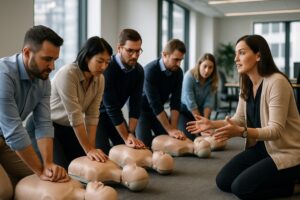
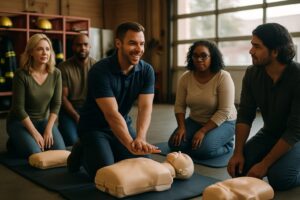
We teach both courses at the Vacaville Fire Department training facility (420 Vine St) on alternating Saturdays, with weekday evening sessions as well. Both cards are official American Heart Association certifications valid for two years.
CPR vs BLS at a glance
Basic CPR AED
BLS for Healthcare Providers
Designed for
Lay rescuers: teachers, trainers, childcare, general workplace
Clinical and medical professionals and students
Skills covered
Adult, child, and infant CPR, AED use, choking response
Everything in CPR plus bag valve mask, pulse checks, team resuscitation
Class length
About 3 hours
About 3 hours
Price at ABC
$60
$65
Card issued
AHA certification, valid 2 years
AHA BLS Provider card, valid 2 years
Frequently asked questions
Is BLS harder than a regular CPR class?
It moves a little faster and adds professional skills and a short written exam, but it is designed for students of all experience levels, including first-time nursing students. Our instructors coach you through every skill until it clicks.
Can I take BLS even if I do not work in healthcare?
Absolutely. Some students take BLS to prepare for healthcare programs they have not started yet, and the BLS card satisfies any requirement that asks for basic CPR too.
Does either class include First Aid?
No, First Aid is its own certification. If you need both, the CPR AED and First Aid combo class covers them in a single five-hour session.
Have a question about any of our classes? Call us at (707) 592-9749 or browse upcoming class dates. Not sure which class you need? Try our class picker.